From the country to the city or from the city to the village – how our society is changing its structure through digitalization.
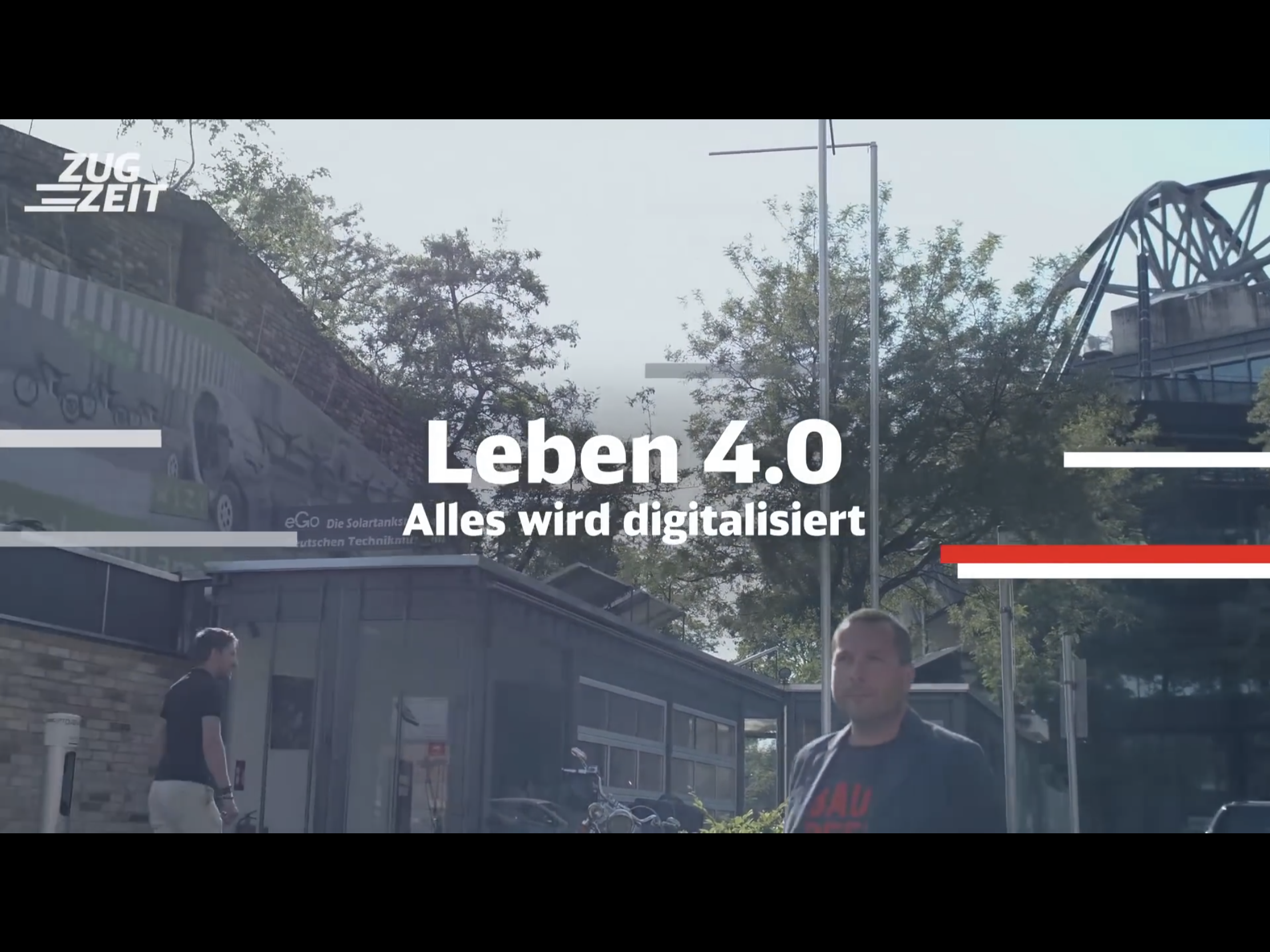
It is called digitalization or digital revolution. Many people also call it Industry 4.0, a term that was coined by the German government. And so many terms are now being used in this direction: Economy 4.0, Education 4.0 or even Village 4.0. Does digitalisation offer the possibility of a renaissance of villages?
For decades we have been learning that people are being drawn from the village to the city – until a few years ago, all studies and forecasts were based on the assumption that life and work will continue to be in the urban area – even in the future. Village means narrowness and dwindling opportunities the longer you stay there. So many villages are abandoned today, only “the old” are still there. In return, the cities are bursting at the seams.
Does digitalisation reverse the trend “from the village to the city”?
First of all, it is important to understand why industrialization has driven all people from the village to the city. Industrialization needs a structure designed for “large central systems”. This means central industrial complexes, which only become efficient by concentrating a lot of manpower in one place: Factories. So people moved from the village to the city because there was better paid work for them there. This principle has not changed for a long time. Even today, we still move to central office and administration buildings, because it is only here that people can coordinate their work in a sufficiently efficient way.
Digitisation offers completely new possibilities for structures
But this is now changing with digitalisation. It means that the central location is no longer necessary. Digitization thinks differently. One example: long before industrialisation, in the agricultural age, we still lived largely in the countryside. We heated our houses with “fuel” from the surrounding area. And when the fireplace was out, the hut was cold.
During industrialization, a central heating plant relieved us of this work, since it could generate energy much more efficiently in a large “boiler” than we could at home. And much more reliable. Nuclear power plants were probably something like the efficiency optimizers at that time. But these giant heating plants, no matter how they were fired up, were not allowed to go out, otherwise entire regions would be without energy at the same time (180,000 households in Münsterland without electricity, for example).
Now in digitalization this structure is being reversed again. For example, we will soon have solar panels (which look like normal roof tiles) on our houses and supply ourselves with energy. So we are coming back to a structure like “before” industrialization. Only this time all of them are networked together. If a solar roof fails, the home does not stay cold, but receives electricity from the worldwide network.
Moving to the cities is no longer necessary in times of digitalisation.
Such decentralized systems are much safer than centralized systems. And in the meantime they are also replacing central industrial systems in terms of efficiency. This is an important basis to understand when talking about digitalization and society. Because centralized structures are no longer necessary in the new digital age. For this reason alone, a decentralization of society can take place again in the future.
There is something more to come. With the fireplace, which we heated ourselves with fuel, it is like with solar roofs: nobody sends a bill! The solar roof belongs to us, it is part of the house. We pay for its installation and give excess energy to a worldwide network. This fundamentally changes such a structure. Energy suppliers are currently trying to stop this trend, but in the long term, with the current service and structure of their companies, they will simply no longer play a role in digitalization. So we are more self-determined again! Another major trend (and advantage) of digitalisation.
More self-determination through digital structures
From this new possibility for self-determination, a new way of thinking will develop in society in the medium term. The generations currently shaping society are still too much adapted to industrial structures. Here we were educated and trained to be a functioning part of the whole. This will be fundamentally different with digitalization. Here we will take on much more responsibility, creativity and self-determination and network efficiently with others when it offers a structural advantage.
That was a long digression. But it shows why the trend to move back into the village will take place in the future. Simply because the economic structures, and thus the basis for our social interaction, are changing so fundamentally that it is simply a) no longer necessary to move to cities and b) it is possible to live in the countryside again. And that within a few years without major losses.
Even today, many creative professions no longer need to be tied to a specific location. People can work from “on the road”, in the office, at the customer’s premises, yet they are always part of the team. Even musicians can sit in different parts of the world and record a song for a new album together.
“Digital Nomads” are still called people who have hardly any permanent residence: their laptop (or digital device) is almost all they need to move around in life. They even store clothes centrally and can be supplied via logistical structures. By the way, there will also be serious changes for our society with regard to a permanent residence: perhaps we will not even have such a permanent residence as we have today. So it won’t be either a town or a village, but depending on what provides the highest possible level of quality of life or efficiency, depending on what you “self-determinedly” give more attention to.
City or village – it will not play a role in the future. We are allowed to decide for ourselves. And probably even change our minds more often.
Retail is adapting to new structures of digitalisation.
The retail sector will also adapt to these new structures. We are currently experiencing a “shop death” in rural regions. Entire city centres are extinct. At least it is depriving more and more small shops of their livelihood. Even supermarkets are less and less to be found in rural areas. If there are, then mostly only on the “green field”.
However, this is not a consequence of “Internet trade”, as is generally assumed, but of industrialisation. Its structure has increasingly ensured that smaller units make less and less sense. In the global price war in which industrial companies are currently finding themselves, margins for traders are falling. What initially led to better purchasing conditions and better margins in the development of industrialization is now increasingly becoming a burden on this system. Industrialization is over-stimulated, new technologies now offer other opportunities. These can only be fully exploited in a digital social structure. In industrial culture they are increasingly becoming a ballast.
Industrialization kills the city center.
Due to the end of industrialisation and the ever decreasing margins associated with it, the existence of shops in villages is increasingly endangered. While until a few years ago it was enough that 2,000 customers lived in the catchment area, today it must be 5,000, some supermarkets and chains go even higher, up to 20,000 people who have to live at least in a direct catchment area before they open a “store” (presumably they have replaced “shop” with store, as this is more efficient – sic). This causes increasing frustration among villagers and partly empty village centres.
But even city centers of larger cities are increasingly dying out. Here, too, it is an exaggeration of the industrial structure that leads to this. Due to ever greater concentration in efficient systems, increasingly only those that are most efficient survive. In the industrial age this has led to a peak phase of department stores. But even these have been replaced by new structures, which in turn are more efficient. Incidentally, one of the most efficient business models seems to be the sale of telecommunications contracts. They are often the last tenants on shopping streets.
Internet brings old familiar microstructures into a new form.
The diffusing diversity in the inner cities was then actually countered by the Internet. All of a sudden there was more diversity here than in the city centres, which today, especially if they offer a mall, function according to the motto “know one, know them all”. To this increasing equalization, the Internet offered a “well-known” variety, many apparently smaller providers, only in a new presentation. Any shop, no matter how small, can currently operate a profitable online shop. Whereby also here already efficient structures by some large market places move in, but the small ones win in the quantity, with rising tendency.
An example: In the USA (according to CNN) the five largest food companies have lost 30% of their market value, because many small suppliers, some with well-marketed craft models (i.e. handcrafted products, but you can’t call them that, otherwise the magic doesn’t work) are increasingly winning the market.
Millennials as a target group think, act and buy differently.
Here, one must take a look at the changing target group. With the Millennials, for the first time a demographic target group has the greatest purchasing power that is no longer primarily shaped by industrial ideals. They are regarded as “digital natives”, and accordingly place much greater value on creativity and self-determined action than the target groups with the strongest purchasing power to date. And with this, “trade structures” are suddenly shifting.
What is now increasingly being sought is not so much “purely” in terms of price and availability, but rather a complexly defined mixture of price, availability, creativity, understanding (products want to be understood by this target group), transparency (who, where from, how) and overall social ethics, in other words: I only buy it if it does not clearly harm society as a whole.
Depending on their socialization, this new target group moves sometimes more in one direction, sometimes in the other direction of the parameters shown. Often this also depends on individual affinities to certain products. This makes these target groups indefinable even today, as they are constantly changing typologies.
Trade of the future in town and country.
In the future, therefore, digitisation will create more and more equality between town and country. This will not happen overnight, but we can already identify the first regions where this trend is already evident. In just five to seven years, many regions that are still remote today will follow this trend – with the prerequisite that someone here in Germany finally decides to take our digital structural supply via cable and mobile out of “second world” status.
This equality is being met by new target groups who are happy to take advantage of these new self-determined and fractal possibilities for themselves. Accordingly, in the future, services will no longer be differentiated according to city and country, but will be directed equally at all people.
It should also be noted that many retail structures will become automated. There will be many everyday consumer goods such as milk, toilet paper, toothpaste and drinks, which we will no longer buy. These will increasingly come home on their own. Of course, this requires logistically sophisticated and far-reaching systems that can deliver not only daily, but also several times a day in rural areas. The technological basis for this is available. But there is a lack of demand and social and political pressure. However, once successes can be seen in the regions where the trend is already towards rural areas, more and more regions will follow. The overall increase in logistical traffic will also lead to further savings, resulting in an ever-improving supply.
There will also be an increasing number of integrated logistics concepts in which different providers work together. So here, too, there will be a dissolution of individual large structures. These large structures will initially help us to support this trend, but in the long term more and more concepts, including smaller regional ones, will interlock. Here, too, the digitalization of general networking will help.
General basic services in town and country
Analogous to the development of trade, the general basic services will also return to the countryside. Here, too, some regions are once again trendsetters. There, a good example is provided by the authorities. In some regions, the employees of public authorities can no longer afford to pay urban rents. As a result, the first authorities are moving back to the rural structural areas, settling there and thus also their employees. There are beginnings to be seen in this context, but there are more to come. Here, too, digitisation helps to ensure that these processes are possible and that the authorities, despite having several locations, can still work together just as well as before.
Health care is also coming back to the region. But not in the way we have known it up to now. But rather in a mixture of digital and personal care. Digitally and via video telephony for many basic illnesses. Here, digital devices such as “smart watches” and other technologies yet to be established will provide additional support. Imagine that these systems are already so intelligent that they can, for example, detect a cold on their own, possibly even before it breaks out, and suggest a therapy independently or, depending on the severity of the illness, together with a doctor, and actively approach the person before he or she notices that they are ill. This is, of course, only one example of an infinite number of possible scenarios in this field, but it should above all make clear that we need to think in a new way. And this applies to the entire care structure.
Digitization brings us back many conveniences “from before” – only in a completely new form. Just think about it.
Contact Max as speaker or moderator
anfragen@maxthinius.de
Via VoiceBox: +49 30 6130 90 41




You must be logged in to post a comment.